Fallopian tube blockage, medically referred to as tubal factor infertility, is a significant cause of female infertility. The fallopian tubes play a crucial role in natural conception by enabling the meeting of sperm and ovum. When one or both tubes are blocked, fertilization becomes difficult.
Studies suggest that tubal blockage contributes to nearly 25–35% of infertility cases.
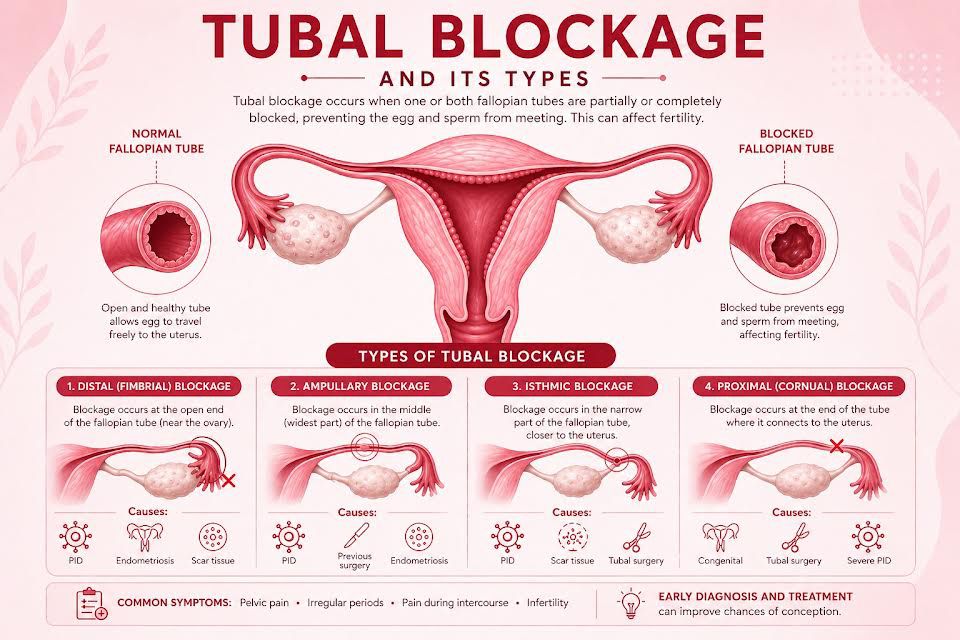
These conditions can lead to swelling, fluid accumulation, fibrosis, and structural distortion of the fallopian tubes, ultimately affecting fertility.
In Ayurveda, fallopian tubes are correlated with Artavavaha Srotas (channels responsible for reproductive function). Blockage in the tubes is understood as Sanga (obstruction) in Srotas.
Results may vary depending on individual health conditions, severity of blockage, and overall reproductive health. A proper consultation and diagnostic evaluation are essential before starting any treatment.
Hydrosalpinx is a condition in which fluid accumulates inside one or both fallopian tubes, leading to blockage. The fallopian tubes play a crucial role in natural conception by allowing the egg and sperm to meet and enabling the fertilized embryo to travel to the uterus.
When fluid builds up, it can block this pathway, making fertilization difficult or preventing the embryo from reaching the uterus. word file mein convert karna hai without any changes
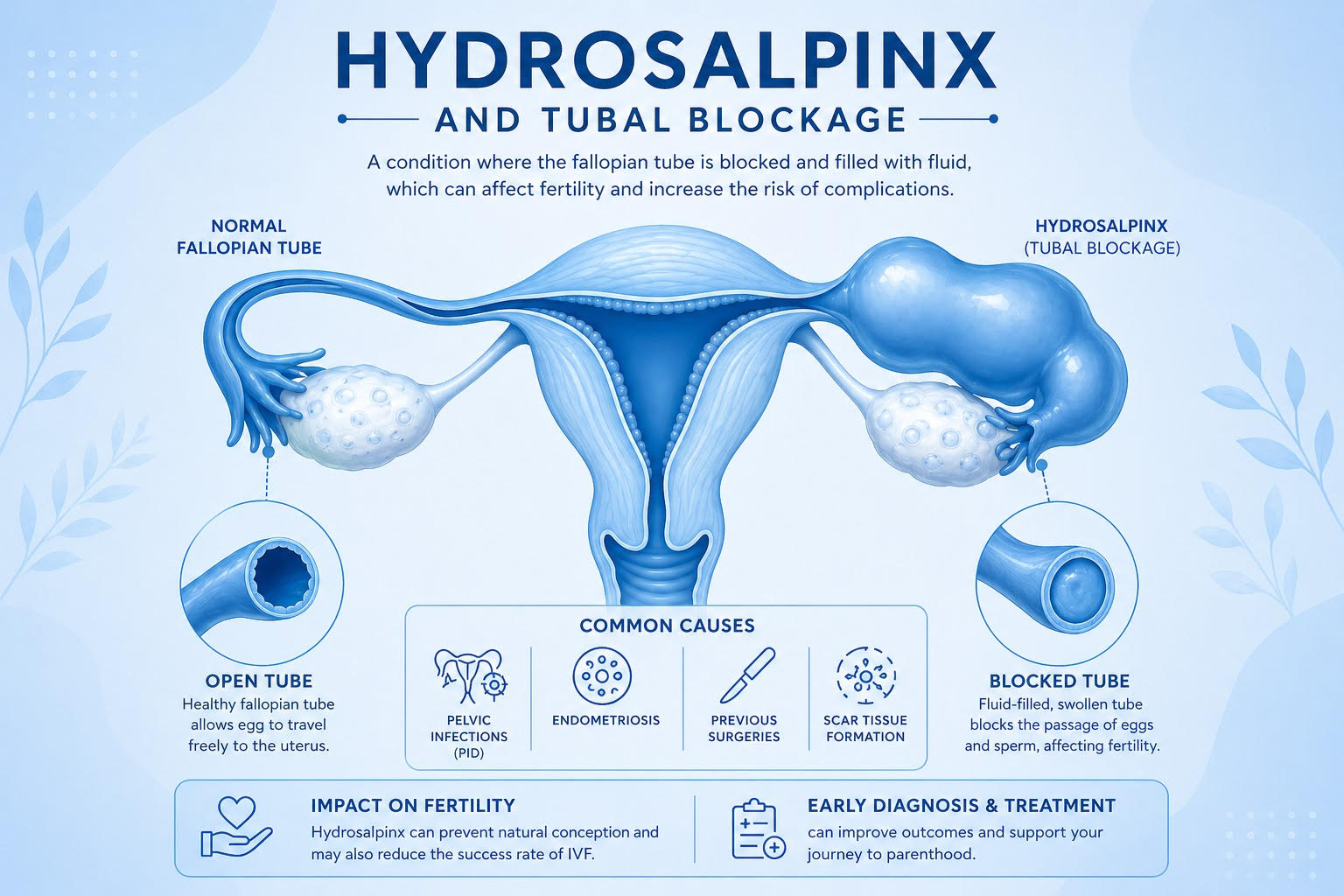
Early evaluation and appropriate management can help improve reproductive outcomes.
In Ayurveda, hydrosalpinx can be correlated with a Kshetraja Vikriti (disorder of the reproductive system).
This imbalance may result in fluid retention within the fallopian tubes, similar to hydrosalpinx.
Ayurvedic care focuses on addressing the root cause and supporting reproductive health through:
Treatment outcomes vary from person to person depending on individual health status, severity of the condition, and associated factors. A personalized consultation is recommended for appropriate evaluation and care.